
Vowenx · Electric components
2-pin motorcycle LED flasher relay, adjustable speed
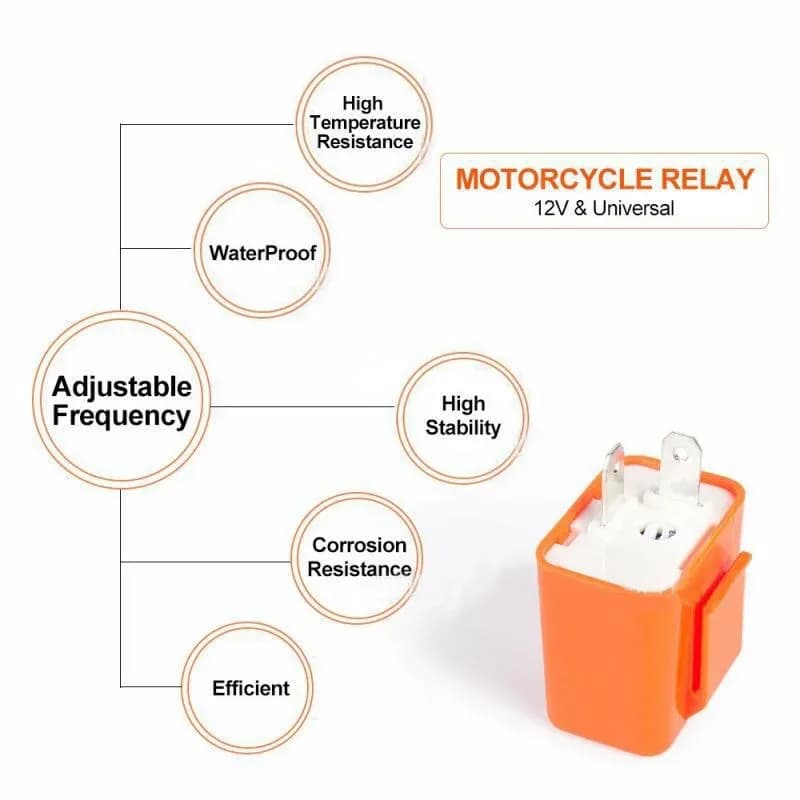
This electronic relay for 2-pin motorcycle turn signals ensures a stable flashing frequency, correcting anomalies related to the switch to LED. It works with traditional bulbs or LEDs, eliminating the need for load resistors.
Rated 4.8/5 based on 58 customer reviews.Color: Black
Quantity
- 8 to 10 day delivery
- Secure payment
- 14-day returns
- 24/7 support
Product details
Essentials
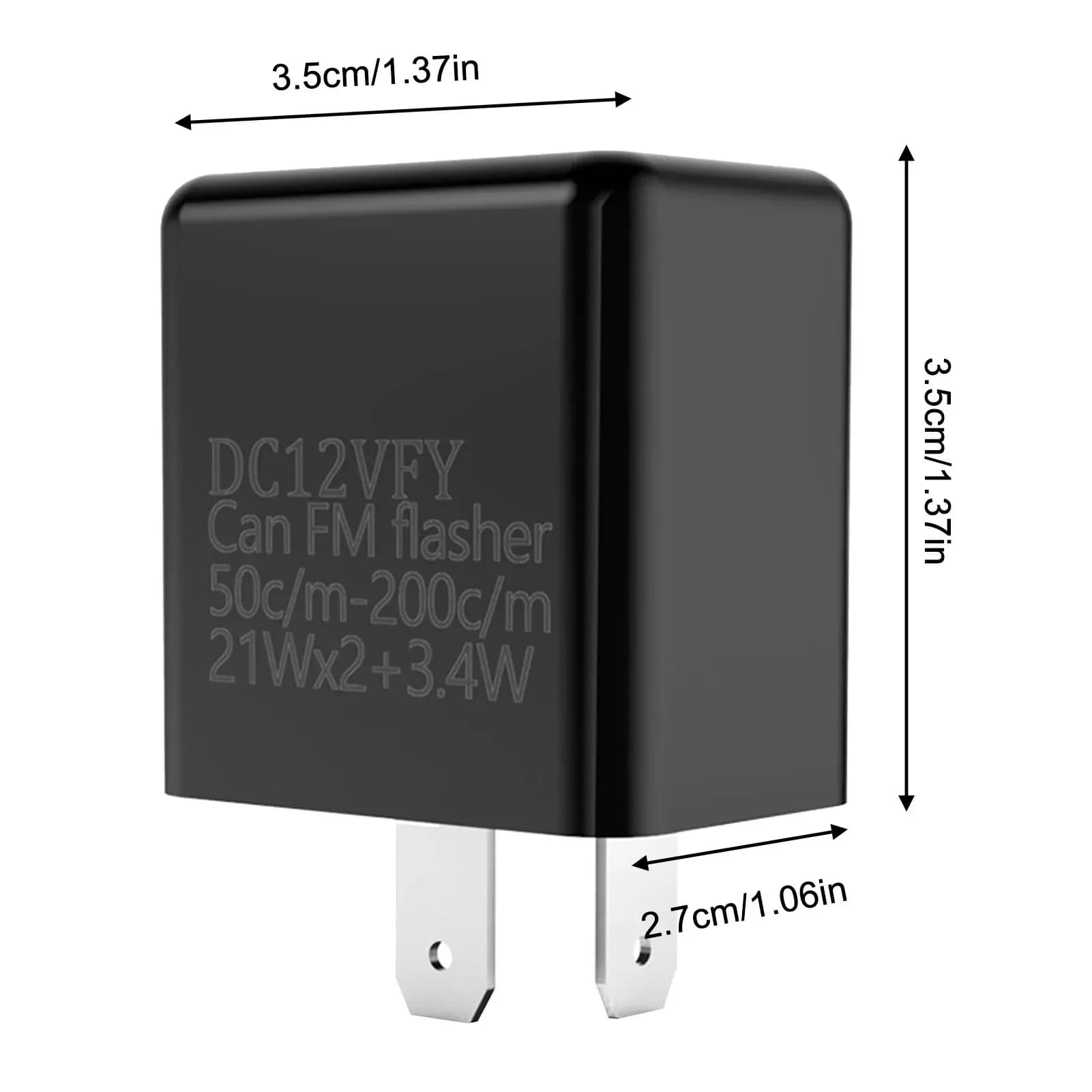
Product type LED turn signal relay Number of pins 2 pins Material ABS Operating voltage 12 V Blinking frequency 50 to 200 flashes per minute Operating temperature -40 °C to 80 °C Dimensions 3.5 x 3.5 x 2.7 cm Switching current Min 0.05 A Switching load Min 0.6 W Electronic adjustment and safety
Manual frequency adjustment and built-in protections to ensure stability and durability.
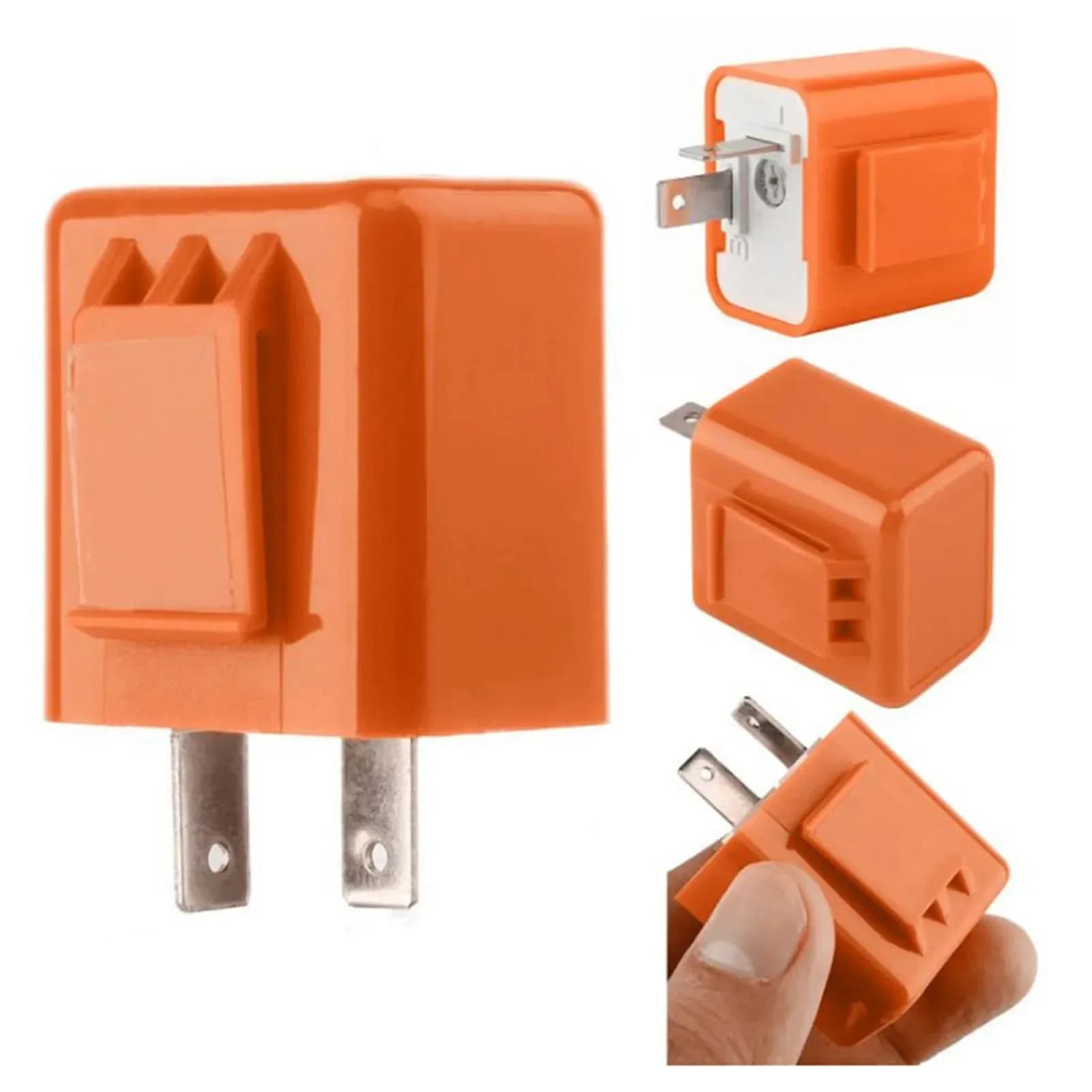
- The blinking frequency is fully adjustable from a faster to a slower speed via an accessible button.
- The integrated circuit includes automatic protections against short circuits, overloads, and polarity reversals for optimal safety.
Universal compatibility and checks
Relay designed for most 12V motorcycles with a standard 2-pin mounting.
- The relay installs on the majority of motorcycles, scooters, and quads equipped with a compatible original 2-pin connector.
- This component works with both types of bulbs: traditional incandescent bulbs and LED bulbs.
Installation and speed adjustment
Direct connection to the 2 pins with simple speed adjustment using a screwdriver.
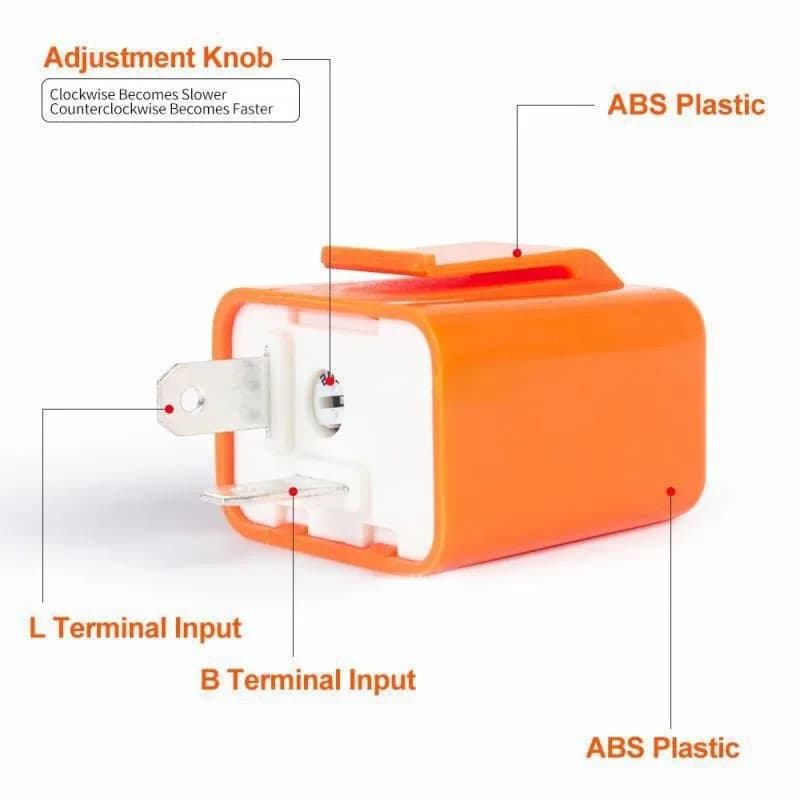
- Pin B corresponds to the positive power input and pin L to the output to the bulbs, with the negative pole remaining connected to the chassis.
- Use a flat-blade screwdriver to turn the adjustment knob: clockwise to slow down the frequency and counterclockwise to speed it up.
Frequently asked questions
How to adjust the blinking frequency?
Use a flat-blade screwdriver to turn the button located at the bottom: clockwise to slow down and counterclockwise to speed up.
Do I need to use a load resistor?
No, this relay is designed for direct connection and does not require a load resistor to function correctly.
Related products
Customer reviews
Loading reviews…
Frequently asked questions
How to adjust the flashing frequency?
Use a flathead screwdriver to turn the knob located at the bottom: clockwise to slow down and counterclockwise to speed up.
Do I need to use a load resistor?
No, this relay is designed for direct connection and does not require a load resistor to operate correctly.